

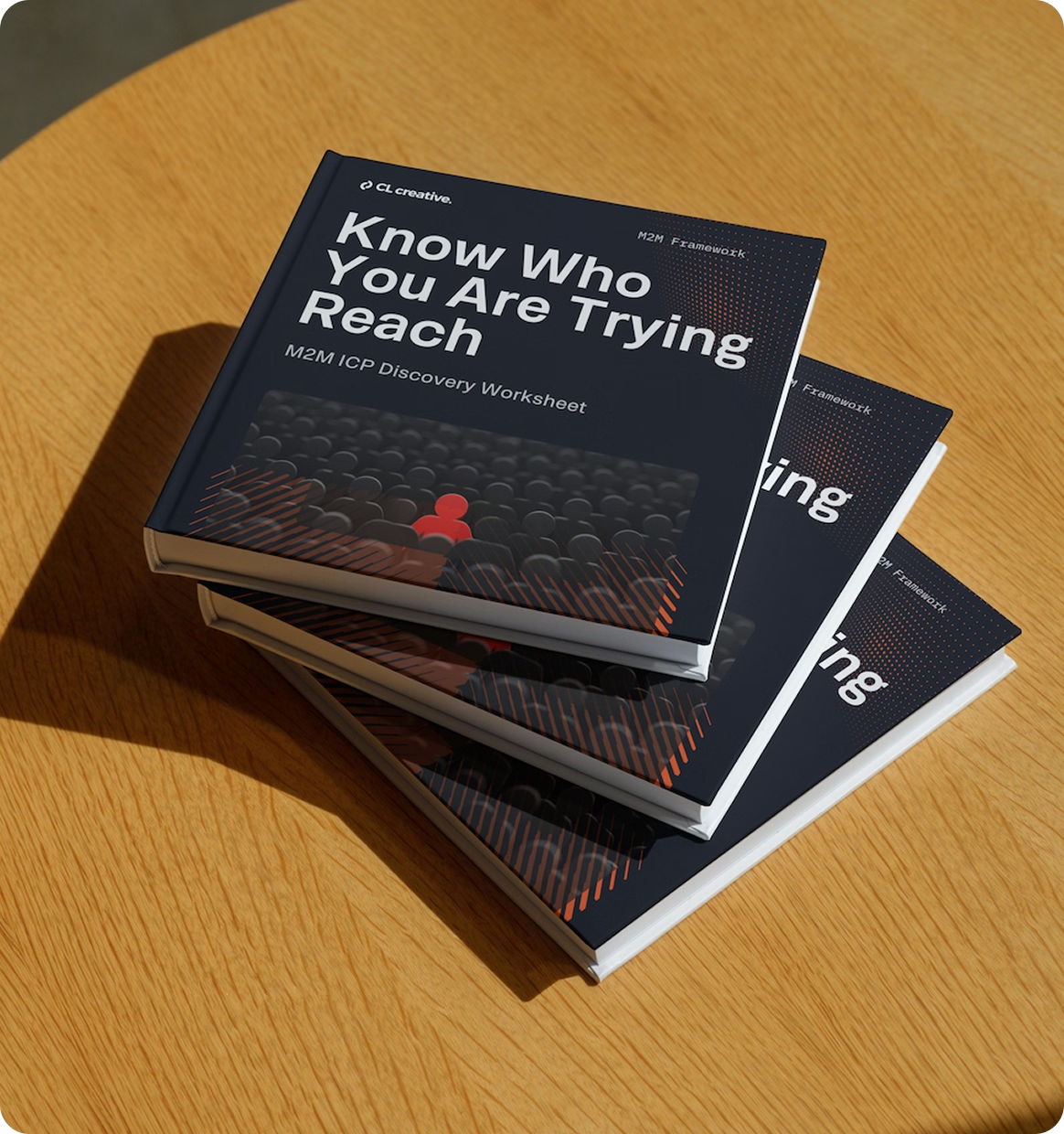
Get the M2M ICP Discovery Worksheet
Know who your website should speak to and what to say.
Here's the short version for how to choose a web designer in Waxahachie:
- Define what you need the site to do
- Verify local proof and reviews
- Ask about their process before design
- Get pricing in writing
- And confirm what happens after launch
Six steps, roughly two weeks of unhurried homework, and it will save you from the most expensive mistake a small business can make online, which is paying twice for the same website.
I run a web design agency here in Ellis County, so I see both sides of this decision: the businesses that chose well, and the ones that come to me after a project went sideways. This is the process I'd give a friend.
Why This Decision Matters More in Waxahachie Right Now
Waxahachie isn't the town it was five years ago. The population is up nearly 25% since 2020 — about 51,900 people now, and the county around it is growing just as fast. Thousands of your potential customers arrived recently. They don't know the square, the family names, or your reputation.
They search. 80% of US consumers look for local businesses online weekly, and nearly half add "near me" to their queries. Your website is your first impression for all of them — and 75% of consumers judge your credibility by it. The person you're about to hire builds that first impression. Choose accordingly.
Step 1: Define the What You Want the Website To Do
Don't start the process with "we need a website". Instead, you need to start by asking the question: what should it do?
- Generate service calls?
- Book consultations?
- Qualify leads before they phone you?
- Etc.
Once you know, write one sentence: "This website's job is to ______ for ______ customers."
That sentence does two things. It helps you understand what you need your website to do. As well as it helps you understand for whom you are building the website.
Knowing these two things, will help you filter out potential partners. When you provide this information to a freelancer or agency, watch who asks follow-up questions about your customers versus who jumps straight to a quote.
You want to work with the person who asks follow ups, specifically those that are centered on your customer and how best to reach them. This tells you they are thinking strategically about the project.
Step 2: Look for Local Proof, Not Just Portfolios
Don't judge a designer on screenshots alone. Screenshots are cheap. Verifiable local work isn't.
Instead, look for designers with real clients in the area:
- Waxahachie
- Midlothian
- Red Oak
- The wider DFW area
These should be businesses you can call, visit, or ask about at a chamber lunch. A designer with a local reputation has skin in the game, and a remote freelancer doesn't. Ours are on our Waxahachie page.
One more thing: check their own website, on your phone. If it's slow, vague, or clunky, that's the standard they hold for themselves. You can assume it's the standard they will hold for your project too.
Step 3: Read Reviews Like a Skeptic
Don't just count the stars. Instead, read the reviews and look for specifics:
- Did clients mention communication?
- Did the project hit its deadlines?
- Did the website produce results after launch?
A review that says "great to work with" tells you less than a single review that says "our quote requests doubled."
Recency matters too. A designer who was great in 2019 may be running a completely different operation today, so ask for two references from projects completed in the last twelve months.
You want to work with the person whose recent clients can point to real outcomes. This tells you the results are repeatable, and not a one-time win.
Step 4: Ask About Their Process Before Design Starts
There is one question that separates decorators from designers who build business assets:
"What do you need to learn about my customers before you design anything?"
The wrong answer is a template gallery and a color questionnaire.
The right answer involves your market:
- Who your customers are
- What problem drives them to search
- Why they'd pick you over the shop across town
Message first, design second. It's the core of the M2M Framework I use, and it's the difference between a site that looks nice and a site that converts.
This step matters more than any other on this list. A redesign that skips it is why so many redesigns don't fix lead problems.
Step 5: Get the Full Cost in Writing
Don't accept the initial quote as the whole number, because it never is. Instead, ask for all of it upfront:
- The build itself
- Content writing
- Photography
- Hosting
- What monthly upkeep costs after launch
In this market, a professionally built small business site typically runs $8,000 to $25,000+ depending on scope. Here's a full cost breakdown, and ongoing support has its own math.
Be careful with a suspiciously low quote. It usually means a template with your logo on it, and you'll pay the difference later in leads that never come.
Step 6: Confirm What Happens After Launch
Websites aren't roofs. You don't install them and walk away for twenty years.
Before you sign, ask these four questions:
- Who makes updates, and what do they cost?
- Who owns the domain, the hosting account, and the site itself? (The answer must be you.)
- Will you set up analytics so I can see whether the site is working?
- How do we work together if I need changes next quarter?
You want a partner who has clear answers to all four. This tells you they plan on being around long after launch day.
Red Flags That Should End the Conversation
- They can't name a customer-research step in their process
- No verifiable local clients or recent references
- They'll own your domain or hosting "to make things easier"
- Pricing is vague until after you commit
- Their own site is slow or outdated
- They promise #1 Google rankings as part of the build
Want to see how we'd answer these questions? Book a free 30-minute strategy session. Bring your one-sentence job description; we'll talk through your market, your message, and whether we're the right fit. If we're not, I'll point you in a better direction.

Want a website built on a system, not guesswork?
Send me a message and tell me about your project. I'll come back with a clear picture of what your site needs to do and a rough budget range, whether you hire me or not.
Questions You Might Be Asking
Freelancers typically run $2,000 to $8,000; full-service agencies with strategy, custom design, and copywriting run $8,000 to $25,000+. Judge the number against what a new customer is worth to you, not against the cheapest quote.
Remote can work technically, but a local designer knows this market — how Ellis County buyers search, what new residents need to see, which local proof matters. For service businesses whose customers are within 20 miles, local context usually pays for itself.
Typically 6 to 10 weeks for a properly scoped small business site. The biggest variable is how ready your content is — here's what actually causes delays.
If you're brand new and testing an idea, DIY is a reasonable start. If you're established and competing for customers worth hundreds or thousands of dollars each, professional design usually wins the math — here's the honest custom vs template vs DIY comparison.
The big five: What do you need to learn about my customers first? Can I talk to two recent clients? What's the all-in cost including after launch? Who owns everything? What happens if I need changes in six months?


