

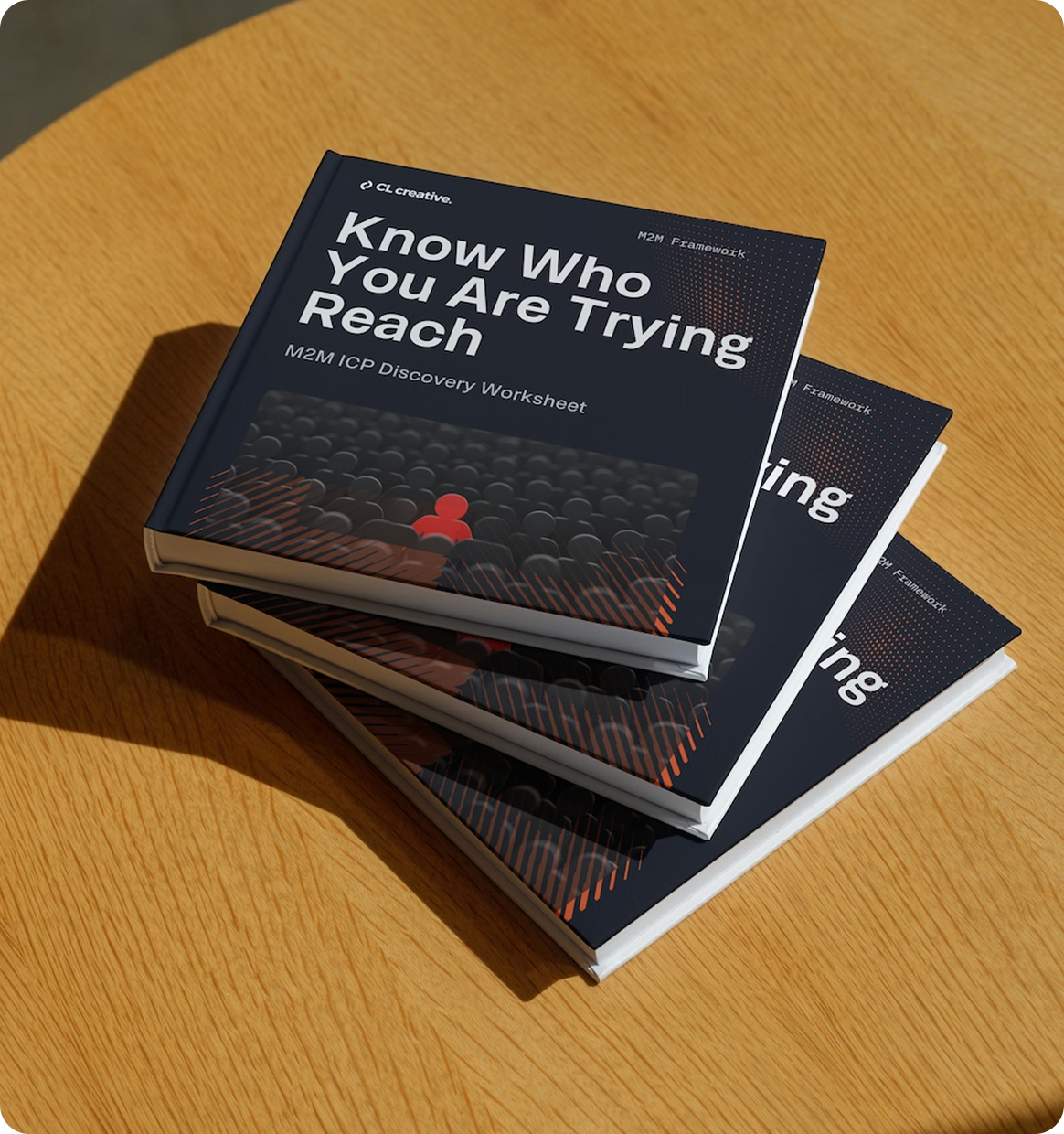
Get the M2M ICP Discovery Worksheet
Know who your website should speak to and what to say.
Four to six weeks.
That's the answer to how long a Webflow site takes for most growth-stage businesses. And I've learned something from years of discovery calls: nobody asks the timeline question because they want a number.
They're really asking three other questions.
- What happens during those weeks?
- What could blow up the schedule?
- And what do you need from me?
So let's answer all three.
What Happens During a Webflow Project, Week by Week?
Here's how a typical project breaks down at CL Creative. Yours might shift a week in either direction, but the shape stays the same.
Week 1: Strategy. Before anyone touches a design file, we work through the M2M Framework. We get clear on who your ideal customer is, what they care about, and what your site needs to say to bring them in. The design and the copy both come out of this phase, which is why we never skip it.
Weeks 2-3: Design. You'll see the homepage design first. We gather your feedback, refine it, then design the interior pages with the direction locked in. Two revision rounds are built in here.
Weeks 4-5: Development. The approved designs get built in Webflow. CMS structure, animations, responsive layouts for every screen size, and the integrations your business runs on.
Week 6: Review and launch. We test across browsers and devices, handle the SEO fundamentals, walk you through managing your new site, and push it live.
Notice what's missing from that breakdown: dead time.
The schedule assumes feedback comes back within a couple of days and content decisions get made when they come up.
That assumption is where most timelines live or die, which brings us to the real question.
I live in Texas, where everybody knows somebody who has built a custom home. A web project works the same way.
The foundation gets poured before the framing goes up, and the framing happens before the finish work.
Skipping ahead doesn't speed anything up. It just means tearing something out later.
What Actually Causes Webflow Project Delays?
After years of building sites for business owners, I've watched the same pattern play out. The project starts strong. Strategy goes great. Design kicks off. Then, somewhere around week three, things slow down.
A feedback round that should take two days takes two weeks. The copy that was "almost ready" still isn't ready. A business partner who hasn't been in a single meeting suddenly has opinions about the homepage.
Here's the thing. The delay is rarely the design. The delay is seldom the development. The delay is almost never Webflow itself. The delay is the stuff around the project.
These are the five I see most:
- Content that isn't ready. This is the big one. A design without real copy is a guess, and "we'll write the copy ourselves" is the most common source of a two-week stall. It's why messaging work happens in the strategy phase here instead of getting bolted on at the end. When the message is settled in week one, the design in week two has something true to say.
- Slow feedback. Each phase ends with a review. A 48-hour turnaround keeps the schedule. A two-week turnaround doesn't just add two weeks; it breaks momentum, and momentum is harder to rebuild than it is to keep.
- Scope changes mid-project. Home builders call these change orders, and they're famous for blowing budgets and move-in dates. Adding a new page type in week five works the same way. It's not that we can't do it. It's that everything behind it moves.
- Too many decision makers. Five people with veto power means five rounds of conflicting feedback. The strongest projects have one person who owns the final call.
- Missing assets. Logins, brand files, photography, domain access. Small things, until the launch date is waiting on a password.
Now, I don't think any of this makes you a bad client.
It makes you a business owner with a business to run.
The point isn't blame. The point is that the schedule is a shared responsibility, and a good agency builds its process around that reality instead of pretending you have nothing else going on.
How to Keep Your Webflow Project on Schedule
You control more of the timeline than you might think. Five things make the biggest difference:
- Settle the message before design starts. Get clear on your customer and your core message first. That's exactly what the strategy phase exists for, and it's the single biggest schedule protector on this list.
- Name one decision maker. Gather opinions from whoever you want, but send one consolidated set of feedback through one person.
- Put feedback windows on your calendar. Treat review rounds like client meetings. Thirty focused minutes within two days beats a thoughtful response two weeks late.
- Gather your assets in week one. Logins, brand files, photos, domain access. Get it all in one folder before design starts.
- Keep a parking lot for new ideas. Mid-project ideas aren't bad ideas. They're phase-two ideas. Write them down and build them after launch, when they won't move your date.
When a Longer Timeline Is the Right Call
Some projects should take more than six weeks, and you should be suspicious of anyone who says otherwise.
E-commerce builds, large content migrations, multi-language sites, and complex integrations all add real scope.
A ten-week project that launches right beats a four-week project you rebuild next year.
The flip side matters too.
Anyone promising a full custom site in a week is skipping the foundation.
Remember the home build. You can rush the framing, but you'll meet that decision again later, and it'll cost more the second time.
So, How Long Will Yours Take?
Four to six weeks for most growth-stage businesses, with the schedule mostly in your hands after kickoff.
I believe the owners who get the most out of a web project are the ones who treat it like that custom home: pour the foundation, respect the sequence, and protect the dates that protect the finish.
So here's my question. If your new site could be live six weeks from now, what's actually keeping you from starting?

Your Marketing Isn't Bringing in Leads and You Can't Figure Out Why
Score your marketing across 7 key areas in 5 minutes and find out exactly what's holding back your leads and what to fix first.
Questions You Might Be Asking
Four to six weeks for most growth-stage businesses. Week one is strategy, weeks two and three are design, weeks four and five are development, and week six is review and launch. Bigger scope like e-commerce or a large content migration adds time, and a good agency will tell you that up front.
A smaller site with finished content and fast feedback can move quicker. A full custom site in a week means the foundation got skipped, and you'll pay for that later. Speed comes from preparation, not from cutting the strategy phase.
Yes. The messaging work happens in the strategy phase, so you don't need to show up with finished copy. You need to show up knowing your business and your customers. We build the message together in week one, and the design gets real copy instead of placeholder text.
Logins, brand files, photography, and domain access, all in one folder. Add a named decision maker and feedback windows blocked on your calendar. Projects with those things in place are the ones that finish on schedule.
We can add rounds, and the timeline and budget move with them. In practice, consolidated feedback from one decision maker makes two rounds enough for almost every project. Scattered feedback from five people is what burns through rounds.


