

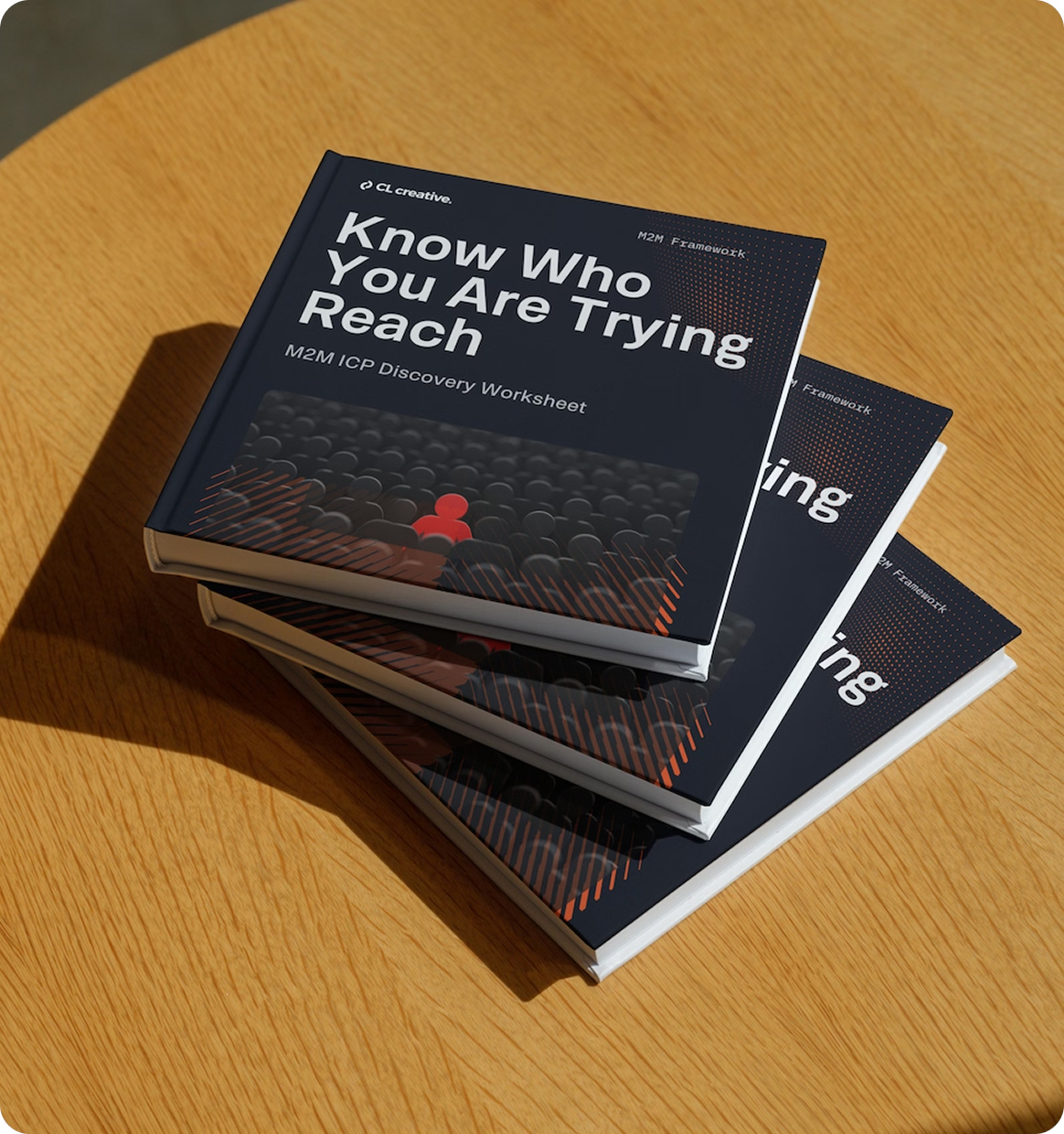
Get the M2M ICP Discovery Worksheet
Know who your website should speak to and what to say.
Every service business has been told to make a lead magnet. So they write an ebook, gate it behind a form, watch four people download it in a quarter, and conclude lead magnets don't work.
Lead magnets work fine. Generic ones don't, and the data on this is unusually clear. MailerLite analyzed 41,000+ signup forms and found learning resources converting at 27.4% while the average form sits at 22%, and short, specific assets consistently beat long, comprehensive ones. I believe the best lead magnet is a working piece of your paid process, given away. Not content about the work. A piece of the work itself.
Here are the five formats that fit that rule for service businesses, with examples from our own site so you can see the principle in action.
1. Self-assessments and scorecards
People cannot resist grading themselves. A good self-assessment asks the questions you'd ask in a paid discovery session and gives the prospect an honest picture of where they stand. Interactive formats like this report start-to-lead rates above 40% in Digital Applied's benchmark roundup, the highest of any format.
Ours is the Marketing Scorecard: it grades a business across 7 marketing areas in about five minutes. The person who finishes it has just documented their own gaps, which is why scorecard leads arrive warmer than any other kind.
2. Worksheets that do one job
Checklists, templates, and worksheets consistently outperform ebooks because they produce something instead of explaining something. The key is narrowness: one job, done in one sitting.
Our M2M Worksheet walks through the first step of our M2M Framework , the same market and messaging questions we work through with paying clients. Someone who fills it out has experienced our process before ever paying for it.

3. Free mini-audits with a real deliverable
An audit says "let me look at your situation specifically," which no PDF can match. The trick is scoping it so tightly you can deliver it without losing your week.
Our AI Visibility Snapshot checks how a business shows up in 4 AI search queries and returns a short report within 48 hours. Small enough to be free, specific enough to start a sales conversation.
4. Short learning resources
MailerLite's data crowns learning resources the top category at 27.4%, and GetResponse's study adds the caveat that matters: short-form beats long-form for most audiences.
For a service business, that's a 20-minute workshop recording, a 5-day email course, or a single recorded teardown. It works because teaching is a free sample of your thinking, and your thinking is the product.
5. Buying guides that are actually honest
Pricing pages, cost breakdowns, and "what to ask before you hire" guides convert because they answer the questions buyers are actually typing.
Most of ours live ungated on the blog, like our Webflow website cost breakdown , and feed the newsletter instead of a form wall. A buyer who reads your honest numbers trusts you before the first call.

The Formats That Waste Your Time
The formats that underperform share one trait: they're generic.
- The 40-page ebook nobody finishes.
- The "subscribe for updates" box that promises nothing.
- The gated blog post that should have been open.
A visitor gives you their email when the trade is obviously in their favor, and "more content" is never obviously in their favor.
Specific beats comprehensive, every single time the data gets measured.
I don't think this means you need all five formats.
One great lead magnet beats five mediocre ones, because each format needs:
- Its own follow-up emails
- Its own promotion
- And its own maintenance.
Pick the one that matches the first question your buyers ask, build it from your actual paid process, and give it a year before you judge it.
An ebook proves you can write. A scorecard, a worksheet, an audit? Those prove you can diagnose, and diagnosis is what clients pay for.
Look at your current lead magnet, if you have one, and ask: is this content about my work, or a piece of my work?
If it's the first kind, what piece of your paid process could you give away this month?

Your Marketing Isn't Bringing in Leads and You Can't Figure Out Why
Score your marketing across 7 key areas in 5 minutes and find out exactly what's holding back your leads and what to fix first.
Questions You Might Be Asking
By category, learning resources lead MailerLite's 41,000-form study at 27.4%, and interactive quizzes and assessments report start-to-lead rates above 40% in other benchmarks.
For service businesses specifically, self-assessments and mini-audits tend to produce the warmest leads even when raw conversion is similar, because they attract people actively evaluating their situation.
Depends on traffic, but the benchmarks give you a sanity check: the median dedicated landing page converts around 6.6% of visitors, and well-matched offers on strong pages convert 20% or more.
If 500 people see your lead magnet page monthly and 30 sign up, you're performing above the median. Zero to five means the offer, page, or traffic is mismatched.
Gate things that produce a personalized output (scorecards, audits, worksheets) and leave educational content open. Open content builds search traffic and AI citations that gated PDFs can't, and buyers increasingly expect answers without a form wall. The strongest setup is open content that earns trust plus one gated asset that captures the ready-to-act minority.
Generic ones do. A checklist called "10 Marketing Tips" attracts everyone; a scorecard called "Grade Your Website's Lead Generation" attracts people with a website lead problem, which is exactly who a web design agency wants. The narrower the promised outcome, the better the lead quality. Weak leads means you aren't being targeted enough.
Less than you think:
- A landing page
- A form
- And an email tool with an automated delivery message
Most website platforms and email providers handle all three on entry-level plans. Spend your effort on the asset and the follow-up emails, not the tooling. A great worksheet delivered by a basic autoresponder beats a mediocre PDF in a fancy funnel.


