

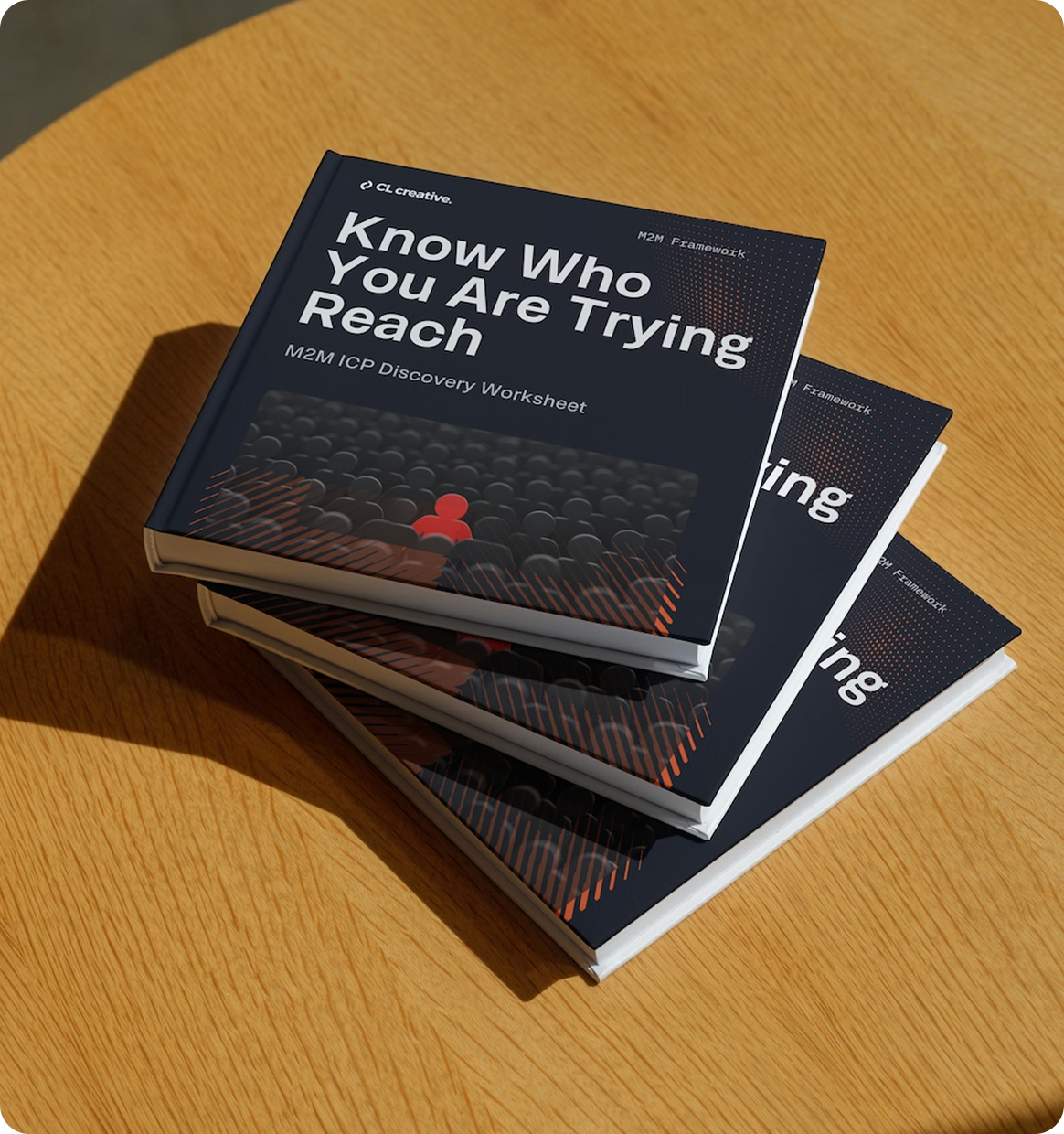
Get the M2M ICP Discovery Worksheet
Know who your website should speak to and what to say.
Most business owners skip this step. They don't mean to. They just assume they already know their customer well enough to get started. Then they spend thousands of dollars on a redesign, launch it, and wonder why the leads aren't coming.
The problem almost always traces back to one thing. They don't actually know their market.
This post is about Step 1 of the M2M Framework . It's the step that makes every other decision easier. If you get this right, your copy writes itself, your design decisions stop being arbitrary, and your conversion rate starts climbing.

What "Knowing Your Market" Actually Means
There's a version of this most agencies do. You fill out a branding questionnaire. You describe your "target audience" in broad strokes. Maybe you even create a buyer persona with a stock photo and a name like "Marketing Mike."
That's not knowing your market. That's decorating a guess.
Knowing your market means you can answer questions like these with specifics, not generalities:
- What revenue range is my ideal customer in?
- What role do they hold inside their company?
- What are the three biggest frustrations they're dealing with right now?
- What have they already tried that didn't work?
- What words do they use when they describe their problem to a peer?
- What outcome are they actually trying to buy when they hire someone like me?
If you can't answer these questions with real data (not guesses), your website is built on assumptions. And assumptions don't convert.
Why This Step Gets Skipped
Two reasons.
First, it feels slow. Business owners want to see progress. They want wireframes. They want mockups. Research feels like delay. So they skip it and hope for the best.
Second, it's uncomfortable. When you actually sit with your ICP's pain points and objections, you sometimes realize your current offer isn't a perfect match for them. That's not a problem. That's useful information. But most people would rather skip past it than deal with it.
The cost of skipping this step shows up later, when traffic is flat, leads are cold, and nobody can figure out why the new website isn't working.
How to Actually Research Your Market
Here's the approach I use at CL Creative, broken down so you can do the first pass yourself.
1. Talk to your best current clients. Not all of them. The ones you love working with who are also profitable. Ask what made them hire you. Ask what their life was like before they worked with you. Ask what they thought might go wrong. Ask what actually happened.
2. Listen for their language. Don't paraphrase what they say. Write it down word for word. The phrases they use will become your headlines and your body copy later. Generic language kills conversion. Their language is gold.
3. Look at your sales calls. If you take notes or record discovery calls, go back through the last ten. What questions keep coming up? What objections do you hear over and over? What are prospects afraid of before they say yes?
4. Check the places they gather. Reddit threads, LinkedIn posts, industry forums, Facebook groups. Watch how your ICP talks about their problem when you're not in the room.
5. Write the profile. Turn everything you gathered into a single-page ICP document. Role, revenue, industry, stage, pain points, goals, language, objections. This becomes the reference doc for every future copy and design decision.
What Changes When You Know Your Market
When you have a clear ICP, a lot of hard decisions get easier.
- Your homepage headline stops being generic ("We build great websites") and starts being specific ("Stop losing deals because your website isn't converting")
- Your service pages focus on the outcomes your ICP actually cares about
- Your blog posts answer the questions your ICP is actually asking
- Your ads and social content stop being scattered and start attracting the right people
- Your sales conversations get shorter because prospects show up pre-qualified
Knowing your market doesn't just improve your website. It improves your entire marketing system.
The Shortcut That Isn't a Shortcut
Some people try to shortcut this by using AI tools to generate a customer profile for them. I use AI in my workflow constantly, but this isn't a place to skip the work.
AI can summarize. It can organize. It can help you see patterns you missed. But it can't replace actual conversations with actual customers. The language you need for a high-converting website comes from real humans, not a language model guessing what your customer might say.
What to Do Next
If you haven't gone through a real ICP exercise, start with the free M2M ICP Discovery Worksheet. It walks you through the exact questions I ask every client during the strategy phase of a project.
Once you've got your ICP locked in, the next step is refining your message . That's Step 2 of the M2M Framework, and it's where the copy on your website actually gets written.

The whole framework fits together on the M2M Framework hub page if you want to see how the three steps connect.
A website without a clear ICP is a billboard on an empty road. Fix the market first. The rest follows.

Your Marketing Isn't Bringing in Leads and You Can't Figure Out Why
Score your marketing across 7 key areas in 5 minutes and find out exactly what's holding back your leads and what to fix first.
Questions You Might Be Asking
Very specific. A good ICP names revenue range, role, industry, stage of business, and the top three pain points. "Small business owners" is not an ICP. "Service-based business owners doing $500K to $2M in revenue who are losing deals to competitors with better websites" is an ICP.
You can, but keep it to two or three at most. If you try to speak to five different audiences on your homepage, you'll end up speaking to none of them clearly. If you do have multiple ICPs, build dedicated pages for each instead of cramming them all into one page.
Revisit it every six to twelve months, or any time your offer changes meaningfully. Your ICP isn't static. As you grow and your services evolve, the person you serve best will shift.
Start with prospect conversations instead. Every sales call, every discovery session, every inbound inquiry is ICP research if you treat it that way. Listen for patterns, write things down, and let the ICP emerge over time.
There's overlap, but not really. Most buyer personas focus on demographics and behavioral assumptions. An ICP is more useful because it includes the specific language, objections, and pain points you'll use in your actual marketing. Demographics alone don't convert.


