

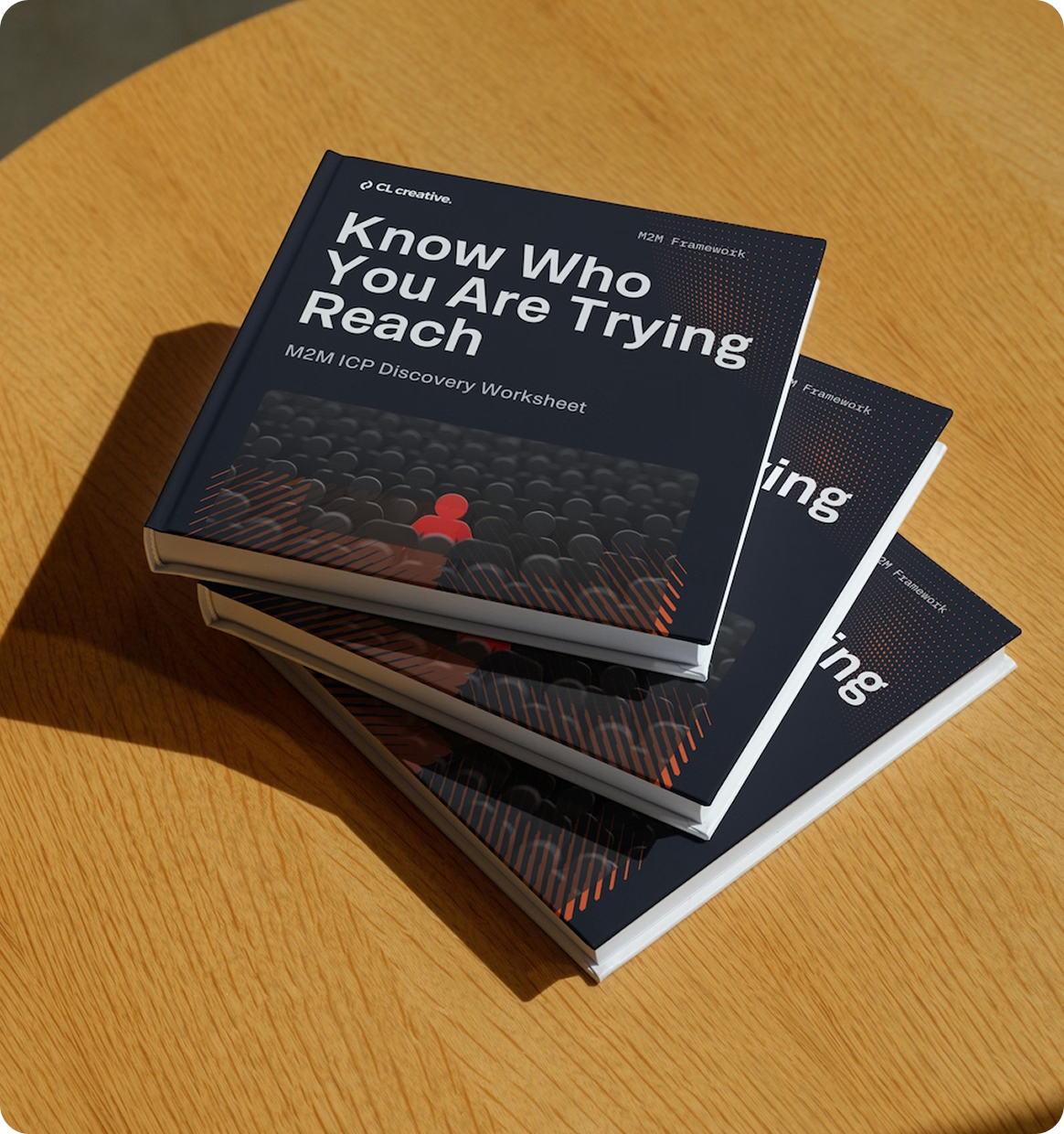
Get the M2M ICP Discovery Worksheet
Know who your website should speak to and what to say.
Here's a 15-minute audit you can run today to find out whether AI search is actually working for your business.
No tool to buy. No agency to call first. Just three searches and a look at the results.
Step 1: Ask the question your buyer would ask
Open ChatGPT. Type in the question a buyer would ask before hiring someone like you. Here are a few examples to get you started. Write down as many as you can think of and perform the search.
- "Who are the best Webflow agencies for service businesses?"
- "How do I find a good fractional CMO for a SaaS startup?"
- "What's a fair price for a brand identity project in 2026?"
- "Who's the best personal injury lawyer in [your city]?"
- "How do I find a reliable commercial HVAC company near me?"
- "What should I look for in a bookkeeper for a small business?"
- "Who are the top-rated med spas for Botox in [your city]?"
- "How do I pick a financial advisor I can actually trust?"
- "Who builds custom homes in [your area] and is worth the money?"
It doesn't matter what you sell. The exercise is the same. Swap in the question your buyer actually asks. That is the key. You are using questions buyers would actually ask AI to find a business or service like yours.
Do not use your company name. Use the real question a real buyer would ask.
Step 2: Read the answer
Did your name come up? If yes, you're in the rotation for that question. If no, write down which businesses did come up. That's your competitive set in AI search, whether you knew it or not.
Step 3: Repeat with Perplexity
Run the same question in Perplexity. Pay attention to which sources it cites in the answer. If your blog or website is one of them, great. If not, note which sites are being cited. That's your content competition.
Step 4: Check Google AI Overviews
Search the same question on Google. See if there's an AI Overview at the top of the results page. Read it. Same drill. Are you in there? If not, which businesses are?
Step 5: Score yourself
Out of three searches (ChatGPT, Perplexity, Google AI Overviews), how many surfaced your business?
- 0 out of 3. You're invisible. AI tools don't know your business exists in this category. Foundational AEO work is the right next step.
- 1 out of 3. You've got a foothold somewhere. The work now is consistency and depth, so the same name shows up across all three.
- 2 out of 3. You're in the conversation. The work is becoming the top recommendation, not just one of several.
- 3 out of 3. You're winning. Keep publishing. Stay fresh. Don't let it lapse.

What to do next
If you scored 0 or 1, the path forward is content. Long-form, Q&A-structured, ICP-aligned content . Published consistently. Schema in place. Each piece designed to be cited.

You can do it yourself. Most of the clients I work with hire it out because they don't have the time or the writing focus to do it well month after month.
If that sounds familiar, here's where to start.
Take the Marketing Health Check. It's a quick quiz that scores your business across the 7 areas every business needs to market effectively, from messaging and positioning to visibility and follow-through. You'll see where you're strong, where you're leaking opportunity, and what to fix first.

Your Marketing Isn't Bringing in Leads and You Can't Figure Out Why
Score your marketing across 7 key areas in 5 minutes and find out exactly what's holding back your leads and what to fix first.
Once you've got your results, book a 30-minute strategy session. We'll talk through how you're currently marketing your business, what you're doing to show up in answer engines, and where the AI content layer fits into your bigger picture.

Want a website built on a system, not guesswork?
Send me a message and tell me about your project. I'll come back with a clear picture of what your site needs to do and a rough budget range, whether you hire me or not.
Questions You Might Be Asking
Write down which sites are being cited. Audit those sites. Count their blog posts on the topic, check whether they use FAQ schema, look at how they structure their headings. That's your competitive content benchmark. Build to match, then exceed.
Yes, if you have time. At minimum, run it on your top three revenue services. That tells you which categories you're invisible in and which you've already got traction in.
Some, yes. AI tools update their underlying data regularly and the answer to the same question can shift. Run the audit monthly for the first three months, then quarterly after that to track progress.
That's actually an opportunity. New categories have less competition for citations. The first business to publish 10 to 15 quality Q&A pages in a new category often dominates the AI conversation by default.
Close to it, but you don't have to match verbatim. AI tools use semantic matching, so close synonyms work. The mistake to avoid is using industry jargon when your buyer would use plain language.


