

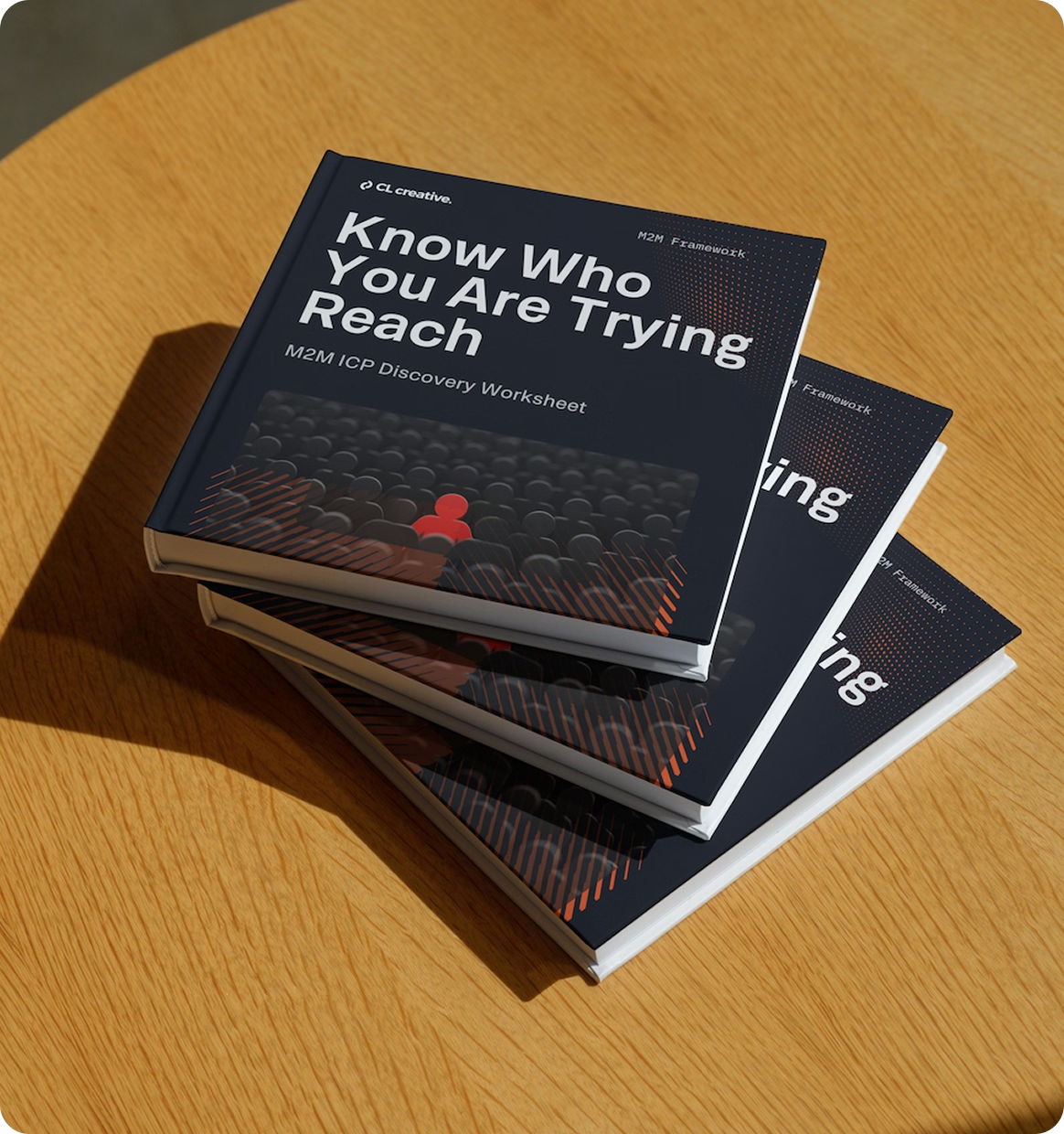
Get the M2M ICP Discovery Worksheet
Know who your website should speak to and what to say.
You typed your business into ChatGPT and got nothing. Or worse, you typed in the kind of question a buyer would ask, and three of your competitors came up. Not you.
This is more common than you'd think. And it's almost never about whether your website is "good." It's about whether your website is structured in a way that AI tools can actually use.
Why ChatGPT might not know about you
There are a few common reasons, and most businesses have all four going on at once.
Your content isn't answering buyer questions.
AI tools cite pages that answer specific questions in clear language. If your homepage is a feature list and your service pages are full of taglines and brand voice, there's nothing for AI to cite.
Your site is too thin.
A 5-page website with one blog post from 2023 doesn't carry enough signal. AI tools prioritize businesses with topical depth, not just topical relevance.
You're missing schema markup.
This is the technical layer that tells AI tools what kind of content is on your page. FAQ schema, Organization schema, Service schema. Most websites have none of it.
Your competitors got there first.
AI tools tend to surface businesses that have been publishing consistently. If your competitors have a hundred blog posts and you have ten, they're going to win the citation game until you catch up.
How to fix it
The fix isn't complicated. It's just consistent.
- Pick five questions your buyers actually ask. Not the questions you wish they were asking. The ones they actually do ask, in their own words. Then write a long-form, Q&A-structured page answering each one.
- Add FAQ schema to every service page. This is a 30-minute job for a developer and it makes a real difference in how AI tools parse and cite your content.
- Publish monthly. Not "when you feel like it" monthly. Actually monthly. Consistency signals freshness, and AI tools weight freshness heavily.
- Speak your buyer's language. If you sell "integrated growth solutions" and your buyer is asking "how do I get more leads from my website," the AI tools aren't going to connect the two. Match how your customer talks.
When to bring in help
If you've got the time and the writing skill, you can absolutely do this yourself. Most of the clients I work with hire it out because they don't have ten hours a month to spend writing in their buyer's voice while also running their business.
If that sounds familiar, here's where to start.

Your Marketing Isn't Bringing in Leads and You Can't Figure Out Why
Score your marketing across 7 key areas in 5 minutes and find out exactly what's holding back your leads and what to fix first.
Questions You Might Be Asking
ChatGPT has a training cutoff, but it also has live browsing built in. When someone asks for vendor recommendations, it can pull from current web content. Your site doesn't have to wait for a training cycle. Publish today and you become a candidate for citation soon after.
Not really. A Google Business Profile helps with Google Maps and local search. ChatGPT and Perplexity pull from the open web. You need actual web pages answering buyer questions for them to cite.
Usually one of three reasons. Your competitors have more topical depth on the subject. Their pages are structured better for AI parsing (schema, clear headings, Q&A format). They've been publishing consistently longer. The fix is the same: catch up on content, then surpass them on quality and frequency.
No. AEO is a 90-day minimum game and a 12-month compounding game. Anyone selling you a 30-day fix is selling you a tactic that won't hold up. Real visibility requires consistent, well-structured publishing.
No. The fundamentals (Q&A page structure, FAQ schema, monthly publishing, ICP-aligned language) require no special tools. You'll want analytics to track traffic, which Google Analytics handles for free. Paid AEO tracking tools exist but aren't required to get started.


